Pages

Showing posts with label Research. Show all posts

Thursday, 11 September 2014

12. Blood Experimenting

 
TASK: Discover the best method for creating realistic looking blood for filming.
 
Below is a video showing the different types of blood which were used for blood experimenting.


I experimented with two types of blood as part of the blood experimenting task. The two types of blood were: Thick and realistic looking blood and dripping blood.

Thick, realistic blood:
  •  2 tablespoons of honey
  • 4 drops of red food colouring
  • 1 tablespoon of cocoa powder
This specific blood proved to be the most realistic, as it was very dark in colour, but not too dark and it had the right amount of thickness. This type of blood would work very well to create wounds and cuts and it is not all runny, so would drip down realistically from the wound or cut. As this proved to be the most successful, I have considered to use it in my film opening. However, I must ensure to use the right amount of each ingredient, otherwise if I use to much of something it may result in being darker or lighter, therefore ensuring I use the right amount of each is important in order to achieve perfect realistic looking blood.
 
Dripping blood:
  • 4 drops of red food colouring
  • Washing-up liquid
This type of blood proved to be extremely runny and the colour projected a bright red. This blood could perhaps work when someone is laying down and the blood is dripping, however if a person is standing, the blood would drip off too quickly which would make it look unrealistic. I wouldn't personally use this in my film opening, as I would much rather use a thicker and more realistic looking blood. On the other hand, I think I could have added cocoa powder, as this would of perhaps made it slightly thicker and much darker. If this would have worked with cocoa powder, then I believe it would have the right consistency for dripping down walls or even down someone's face. This also would have worked to create a slow-flow of gore.
 
Overall, i found that the 'thick, realistic blood' proved to be the most effective as it was thick and dark, yet still remained looking realistic. However, due to my sub-genre of horror being phychological, i will not be using much blood as psychological horrors are mainly associated with the mind, therefore the mind is perceived to be the only weapon for creating fear and emotional instability. On the other hand, some psychological horrors do incorporate a weapon and some do show blood, however some only show the action of the killing. Similarly, my final scene will show the victim being killed with a knife, however due to filming the back of the killer, there will be no gore on display and the killing still adds to the psychological element of my film opening.

11. Preliminary Task Video


TASK 1: Shoot and edit your preliminary task video.


Displayed above is my preliminary task video. In the 45 second video I have presented match on action, shot-reverse shot and the 180 degree rule. This task is very beneficial, as it enables me to practice the different techniques and improve on areas that need improving. I can then apply my improvements and the different techniques to my film opening.

TASK 2: Explain what each of the continuity editing features you have been asked to demonstrate are.

1. Shot-reverse shot

Shot-reverse shot is a film technique that is used to show one character looking at the other character, and then this is reversed to the other character looking back at the first character. This type of shot is mainly used when two characters are having a conversation. Usually if one of the characters is speaking, the camera will face them and if the other character exchanges dialogue then the camera will immediately switch to them. However, if the character exchanges very short dialogue, the camera may not necessarily switch to them. The characters are typically placed so they are facing each other in opposite directions, therefore the viewer initially assumes that they are looking at each other. Below is a diagram displayed on how the cameras must be set up in order to achieve the perfect angle for a shot-reverse shot.


2. 180 degree rule

The 180 degree rule is a basic guideline concerning the on-screen relationship between two characters within a scene. There is usually an imaginary line called the axis, and this connects the two characters. This means that the camera must always be on one side of the axis for every shot in the scene, whilst the characters both remain in the centre and the camera faces towards the characters. The first character is always right of the second character, who is then always left of the first. Below is a diagram displaced demonstrating the 180 degree rule.


 3. Match on action

Match on action is an editing technique which is used for continuing editing in which one shot is carried on to another shot portraying the action of the subject in the first shot. This technique gives the video a sense of continuity, therefore it draws the viewers attention and the audience know exactly what is going on, rather than switching the shot to a different scene every second which may cause confusion for the audience. Below I have displayed how I have used the match on action in my preliminary task video.


10. Preliminary Task Storyboard


TASK: Complete a storyboard to plan your preliminary task.

Above I have displayed my digital storyboard that I have used for my preliminary task video. Firstly I planned my dialogue and the type of shots I was going to use in my preliminary task video and I have displayed this throughout my storyboard. I have included 6 shots for my storyboard and each one states the type of shot in the video, the camera movement and the dialogue or sound that has been used. When I finished filming and editing my video, I then used images from the video to incorporate into my storyboard in order to make the storyboard look more visually appealing. The storyboard that I have created will be very beneficial to me when it comes to the production and post-production stage as it is a good form of planning and is good for me to look at when I film and edit my video.

9. Preliminary Task Script


TASK: To practice writing a script for your film opening you are going to write a short script for your preliminary task.

Aida walks towards the library and enters. She sees Rosie and approaches to find a seat.

AIDA: Hey!

ROSIE: Hi!

AIDA: Have you done your Sociology essay?

ROSIE: I'm doing it now actually

AIDA: I finished it last lesson

ROSIE: I find it quite difficult, could I use your sheet?

AIDA: Yeah, sure! (hands over sheet) I have a lesson now so I'll collect it later

ROSIE: Thanks! I'll catch you later!

AIDA: Bye!

Aida gets out of her seat and exits the library.


8. Audience Expectations

TASK: Answer the following questions:


1. What is the sub genre of horror you are creating? 

The sub genre of horror I am creating is Psychological.


2. Who do you think the target audience for this sub genre is and why? Back up your points with specific examples and conventions from the genre. Why do you think these people will enjoy your sub genre?

The target audience for this sub genre would most likely be anyone from the age of 15 to 30. Films that are a 15 usually include strong threat and horror, therefore this is the lowest age of audience that i can target this particular sub genre at. However, some 12A and 12 films include moderate physical and psychological threat, but these must not be too frequent or sustained, therefore having a 12A and 12 audience may be considered to be inconvenient for me as I will want to include strong threat and horror which i can only do so if my audience is from the age of 15. In addition, I have stated that the sub genre is aimed towards adults up to 30 as psychological horror movies can appeal to any age as it would depend on the person, however adults up to 30 tend to be much more interested in this particular sub genre than for example a 50 year old. I believe that both men and women would enjoy psychological horror movies due to both having an interest in the different elements that a psychological horror movie has to offer. For example, men would typically enjoy scenes with gore and violence, however women find more interest in scenes which create suspense and entertainment.
3. What demographic do you feel would watch your film?
The Jicnar scale puts people into categories A, B, C1, C2, D and E based on their job. Their job will usually determine their education level and income so is useful in considering the type of lifestyle that your audience may lead.
I believe the demographic that would watch my film would be social E. Although this category only has a percentage of 8 in total, I have come to the conclusion that this will be my demographic due to teenagers and students falling under this classification. In addition, my film will be aimed towards those whom are 15 years old or older, therefore teenagers or students whom are 15 are most likely to be unemployed, which only means that they will have much more time to go to the cinema and watch movies. Moreover, someone who is from the B demographic group will have a professional career and a busy schedule, therefore they will be less likely to attend the cinema and watch movies.
4. What BBFC classification will your film fit into? Use the BBFC website to decide this. The sub-genre that you choose to create will determine whether your film will be a 15 or 18. What effect will this have on your target audience?
The BBFC classification that my film would fit into would have to be a 15. Due to psychological horror movies not displaying very strong violence or strong horror, it would be unsuitable to display my film as an 18. Psychological horror movies are mainly associated with the fears and emotional instability of a character, therefore it is unlikely for a psychological horror movie to include very gory scenes, strong detailed sex or sadistic or sexualised threat. Many horror movies are classified as a 15, therefore I don't think this will have any particular effect on my target audience. In addition, anyone whom is younger than 15 may feel that it is too scary, therefore they may be unable to handle some of the scenes that are displayed in a 15 classified movie. It is crucial that I do not exceed the guidelines of a 15 by including strong detailed sex or very gory scenes. On the other hand, due to my film being a psychological one, I don't think this will be a problem.


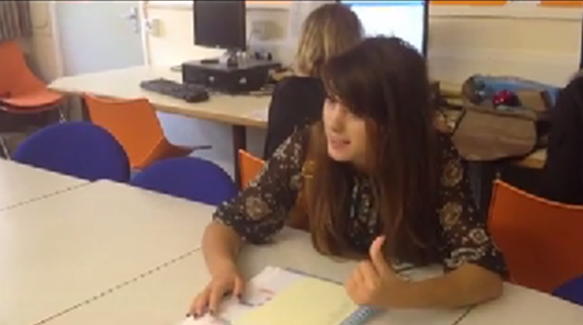
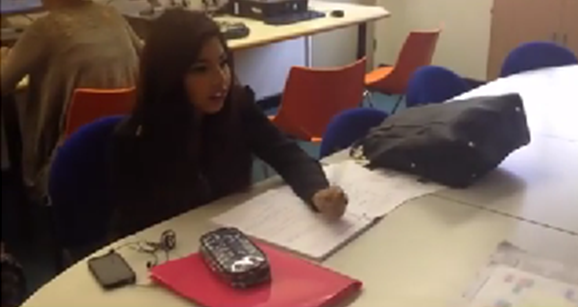
In order to know exactly what my target audience expect to see in a psychological horror movie, below I have created a short video asking several people who I believe to be my target audience, the question "What do you expect to see in a psychological horror movie?".

7. Nine frame analysis

TASK: Analyse nine frames of an opening sequence in detail. To do this again use the art of the titles website or take your own screenshots from an opening sequence.

The film that I have chosen to analyse the following nine frames is 'The Conjuring'. I have used http://www.artofthetitle.com/ to get the nine frames of the film. The opening sequence of a film enables the audience to gain ideas about what the film is going to be about and perhaps capture interest which makes the audience feel intrigued with what is to happen next.
 
The Conjuring
 
1. The first shot shows who the film was written by, these two people are at the very beginning of the opening sequence as this displays their importance. The background is black and white, mainly black which informs us that this is a horror movie, perhaps a supernatural one due to the black and white colouring which is often featured in paranormal films that present real life stories. The background is also of a newspaper and the font too suggests that this film is perhaps of a real life story which happened several decades ago. It could be said that this is a period inspired film. We can identify this by simply looking at the typography and colours which often would appear in older films. We can also see the words 'ghost-hunter' in the background, yet again illustrating that this film could be somewhat related to the paranormal. Additionally, it seems that the newspaper is projected onto a translucent screen and is zoomed in, this is purposely done so the audience are able to see the significant words in order to identify the genre of the film. The non-diegetic soundtrack that is being played is very much haunting, which may give the audience a rather disturbed and uneasy feeling.
 
2. The second shot shows who the film was produced by. The background is also black and white.This image also looks like it has been projected onto a translucent screen. The image shows a male and a female sitting down in front of a big crowd. It looks like they are sat in a lecture, which links back to the first shot as it says " ghost-hunter gives second lecture here" so we can only assume that either the male or the female presented in shot 2 is the ghost-hunter. The clothing that the male and female are wearing look rather old-fashioned, which suggests that the film is based on the past and they are lecturing about one of their cases. We know that they are ghost-hunters, so this further supports my point about the movie having a paranormal theme. The use of the overhead projector which is used for teaching yet again suggests that film is based in the 70s. The typography of the title sequence continues to be the same, which is still kept very simplistic which conveys a professional image. This image is also a long shot which is used in order to show the audience that this really is a lecture by showing the back of the heads of the other people and their surroundings. The non-diegetic music continues, which increases the uneasy feeling.

3. The third shot shows what looks like an article from a newspaper with the heading "Haunted Artifacts Museum" the word 'Haunted' suggests that this is a film related with the paranormal and the non-diegetic music supports this. However, the non-diegetic music becomes much lower and the volume decreases. The use of the colour black supports the dark matter and dark energy of the film. Considering the article mentions a museum, it could be implied that the image in this shot is of the museum, however due to it looking slightly out of place, it could be abandoned hence why it is described as 'haunted'. This image also looks like it has been projected onto a translucent screen, and we get the idea that all of these images and newspapers have been gathered from true past events that perhaps the ghost-hunter is making them as part of his paranormal case. The newspaper article is yet again black and white which suggests that this film is based on the 70s as they did not produce newspapers with colour during that time.

4. The fourth shot shows yet again a background of a newspaper, however this one has an image of a women dressed in what can be said 70s clothing. This yet again implies that the film may have historical aspects linking to the paranormal theme. Looking closely, we can see words in the newspaper article, such as, spirit, dead boy, demon hunters and witches coven all words associating with the paranormal theme. The article mentions a dead boy, therefore the film could be based around a true story about the dead boy and the ghost hunters are called in to investigate the matter of this paranormal force. We can only assume that the woman photographed in the newspaper article is the dead mother's boy, however we question why she has a smile on her face. Through this shot, we also discover the names of the ghost-hunters which are Ed and Lorraine Warren and we can assume that they will be significant characters throughout the film due to their name being mentioned several times. The lighting that is projected onto the image suddenly darkens just seconds before it is changed to a different image, this creates a very mysterious and eerie atmosphere, but also links to the death of the young boy. The non-diegetic music progresses and continues to produce an eerie feeling which connects with the story of the dead boy and the demons. Reading the article and listening to the non-diegetic sound in the background instantly brings a feeling of uneasiness.

5. The fifth shot shows a sheet of acetate which is lifted so its perpendicular to the camera. When the photograph is flipped, it reveals an entirely new image, creating a transitional moment. The use of real life photographs yet again indicate that this film is going to be based around a true story, due to real life photographs of the two families that have been shown. The photographs that have been shown must indicate their importance to the story, meaning that they have relation to the story or are victims of the paranormal events.  The non-diegetic music continues, however we also can hear the diegetic sound of the person flipping the photograph. The typography still remains very classic and minimal so it doesn't overcomplicate the professional image of each shot.

6. The sixth shot shows a woman standing next to a house with five other girls whom vary in age. Their faces, besides the woman's is covered with the names of the characters in the film, perhaps this shows their insignificance and that the only significant person is the woman. Children are also a key symbol used in horror films, especially in psychological horror movies, therefore the fact that children are included instantly implies that this is a horror movie. Looking at their style of clothing, we can see that it is not modern, therefore we can guess that this photograph was taken several decades ago, again linking to the idea of a historical matter. The non-diegetic music continues, however the voices of what sounds like demons clashes with the sound, adding to a much more sinister feel. The image is a medium shot which is used to show the audience their choice of clothing in order for identify which period this photograph was taken and what period this film will be based on. In this shot we can also see the incorporation of macro shots of hands shuffling sheets of acetate as well as the archival imagery. This is used to show the before and after shot, the after shot including the titles of significant actors.

7. The seventh shot shows what looks like a black figure with a sun reflection. The black figure of the person could suggest evil due to the hidden identity. The reflection of the sun brings light to the scenery, which doesn't make it completely sinister. The location in the photograph looks like the woods, which is a very popular location to use in horror movies due to it being isolated which brings a feeling of suspense and mystery. The same non-diegetic music continues and we can hear the diegetic sound of the pages flipping. The photographs, newspapers and sheets of acetate that are shown are continually flipped at a rather slow tempo, which makes the film seem much older. The slow pace is used purposely so the audience are able to absorb the simplicity of the compositions and the content, but also the eeriness of it all is to scare the audience as with the slow pace of it all, we never know if or when something is going to jump out. The shots are not designed to impress the viewer, nor does it have to. The impression that anything can happen at any moment is what creates the paranormal and eerie atmosphere. However, if looked at closely, in some of the shots some things actually do happen.  

8. The eighth shot shows a number of people around a table, however their faces are blurred which makes them non-identifiable. This also adds to the idea of the film being a paranormal one, as typically when a place is haunted and a photograph is taken, the paranormal force takes dominance which blurs the identities of the alive ones. The significant of the people who are around the table with their hands on it, all in the same position further supports this idea, as it appears that they are trying to dismiss the paranormal forces. The director has yet again used black and white cinematography in order to convey this is a period inspired film. The use of photographic compositions and an archival approach adds to the eerie, yet genuine quality of the opening sequence, creating a 70's period piece. The ominous and off beat pace continues and this is further supported by the use of non-diegetic eerie music which at times sound like the voices of ghost that impede throughout.

9. Lastly, the final shot displays a long shot which shows a house and a large tree nearby, however the tree has rope attached to it which is tied into a circle which indicates that someone has used this to hang themselves. Most likely a member which lives in the house presented. The use of the big house which looks like it is in the middle of nowhere is a convention location that is used in horror films. The use of such a location creates mystery and suspense, but towards the end of the opening sequence, we can already gather that this is going to  be a horror film, especially one that is associated with the living dead. The cinematography used is yet again black and white which is very old-fashioned and is used to portray the period that the film is based on. The typography even for the title still remains very simplistic which keeps with the professional image. On the other hand, this particular shot differs to the rest, due tot the fact that this does not look like a photographic image, instead it looks more like a sketch drawing and it makes it look like something that would've been designed in the 70's as sketch drawings were very popular during that time as not everyone had access to technological resources such as cameras. 

What has this analysis taught you and what can you take forward for your own film opening?

This analysis of the opening sequence of 'The Conjuring' has taught me a diverse range of skills which will be very beneficial when it comes to planning, filming and editing my own title sequence. Analysing each shot has made me much more aware of why specific images are used and what they convey. I have learnt that every image links to the next in some kind of way and this enables the audience to guess what the film may be about. The entire title sequence of The Conjuring was in black and white, and I learnt that the use of such cinematography is used purposely to convey the period of time. For example, if this was a modern 21st century film, the use of black and white for a title sequence or even the film is very unlikely. The use of diegesis is also key for a title sequence, and throughout the whole of the title sequence for The Conjuring there was non-diegetic eerie music which created tension from the very beginning and mystery as it was hard to predict whether something or someone will appear to scare the audience.  The use of the non-diegetic eerie music also made it predictable from the very beginning that this was going to be a film within the horror genre. The whole idea of a film opening is to get an insight into what the film will be about, but also to present significant people who made the film possible in the first place. The titles of the names are displayed at the very beginning after the production company logos  and can usually last from two minutes up to five. The names of the people involved in the film are presented from most important to least important. Most important being at the very beginning. The typography that is used to present all of the titles is also significant as this helps to create meaning at the very beginning and through typography we can usually assume what kind of film it will be. Learning about each of the different elements which are used to create a title sequence has proved to be highly beneficial, as I can now incorporate these techniques into my own title sequence.

6. Certificate Ratings

TASK: Use the BBFC website to research each of the classifications and summarise your findings.


Displayed above is a presentation of my research for each of the classifications. I have used http://www.bbfc.co.uk/ in order to research about each of the classifications and see which one will be most appropriate for my idea. The BBFC website was very useful, as it showed exactly what could and could not be included in each of the classifications. From my research, I found that the most suitable classification was certificate rating 15 as I thought this was most convenient for my film idea, but also by aiming my film towards a 15 audience, I am bound to have a much bigger audience than I would if my film was to be aimed towards a 12 or 18.

5. History of the horror genre

TASK: Investigate the history of horror. 


Displayed above is a presentation of the history of the horror genre. For this presentation, I have researched the different sub genres of horror and their conventions and how horror has changed and developed throughout the different periods. Researching about the horror genre has been very beneficial to me, as it is a great way to find inspiration and ideas for the planning of my film opening. Looking through the different periods has given me some insight on what was popular then and now, therefore looking at what is popular now in horror films can be useful to me as it will enable me to identify what I should include in my film opening in order to meet todays audience's expectations.

4. Genre Conventions

TASK: Create a word cloud that contains all of the key words and conventions for the genre of film you are going to create. A word cloud is a visual display of lots of words on a particular topic.


The word cloud presented above was created through the website http://www.wordle.net/. The word cloud is a form of research that enables me to explore the different codes and conventions that are typically presented in the genre of horror. The word cloud allows me to be more imaginative and original with my planning for the opening of my film. As displayed, the word cloud explores characters, such as, 'Aliens and werewolves' and locations, such as, 'The woods and the graveyard', both of these are key elements for planning, therefore I can attain more inspiration and ideas through the use of a word cloud. These ideas will then be incorporated into the opening of my film. Although I have stated a variety of words that associate with many sub genres of horror, I have also included words that associate with my chosen sub genre which is psychological. Words such as: 'Deranged, Fear and Scream' are all elements that are portrayed in a psychological horror film.

3. Understanding of camera shots


TASK: Create a PowerPoint that explains how micro elements are used in film openings to create meaning and provoke response in the audience. The PowerPoint should cover the following micro features:
  • Extreme close up
  • Close up
  • Medium shot
  • Long shot
  • Extreme long shot
  • Track
  • Pan
  • Tilt
  • Zoom
  • Cut
  • Pace
  • Performance
  • Diegetic
  • Non Diegetic
  • Mise en Scene (Setting, costume, figure expression, props)


Above is a presentation of my analysis of how camera shots are used in opening sequences to create meaning. My analysis was on the film 'Scream' and I created this presentation using http://www.powtoon.com/ and uploaded it onto https://www.youtube.com/. This analysis of the micro elements has allowed me to gain further knowledge on the importance of camera shots, performance, pace, sound and mise-en-scene, therefore this will be of great help when I come to producing my film opening. Additionally, analysing the camera shots of a horror film has made aware of all the camera shots that are used in horror films, so it is important for me to include as many as I can in order to produce a good quality film opening in order to make it appear realistic. As I have gained more insight into the typical conventions that are conveyed in the genre of my film, I will have no problem incorporating these in my own film opening. 

2. Timeline of an opening

TASK 1: Conventions

a) Present the conventions of a film opening, what do you expect to see in most film opening scenes.
  • Film institutions (Studio/Production Company logo)
  • Establishing shots
  • Location
  • Opening credits
  • Non-diegetic music
  • A voiceover
  • Enigma
  • Flashback
b) Think about the genre of film that you are going to make. What are the specific conventions of a film opening in this genre?

Horror-
  • Cinematography - Motivated lighting and shadows
  • Location - Isolated
  • Sound - Non-diegetic
  • Camera angles/movement - Close up/Tilted angle/low angle/zoom
  • Editing - Fast paced
  • Mise-en-scene - Setting is dark and clothing is usually casual.
  • Narrative structure - Nonlinear  

TASK 2: Timeline of a Film Opening

I have selected to look at the opening of the film 'The Silence of the Lambs' (1991)


I watched the opening sequence of the film 'The Silence of the Lambs' (1991) and made a note of all the 23 titles that appeared in the space of 5 minutes. Additionally, I also produced two timelines, one which displayed the video and the second displaying the non-diegetic soundtrack. Both were annotated in depth, in order to illustrate what happened in-between the times. As displayed, the first timeline for the video shows that the title sequence lasted for 5 minutes exactly, however we were also introduced to a scene where a woman was appeared to be jogging in the woods starting at 1:11, this ended at 3:46. The scene then changed to the same woman, but at 3:46 she had appeared to be in what looked like a police building. Finally, at 4:59 the same woman entered an office and the final title of the sequence ended at 5:00. Moreover, the second timeline for the soundtrack displays how the non-diegetic sound increases and decreases throughout the sequence, this is how the tension is measured within the scene. The more the non-diegetic sound increase, the bigger the tension and the more the non-diegetic sound decreases, the less tension there is. However, the non-diegetic sound fades out at 3:45, yet the title sequence continues until 5:00.

This form of research has given me a much better insight on how exactly the title sequence is structured and roughly how long is lasts. Recording every single individual time for each title enables me to see the timing structure much better, therefore when it comes to planning the opening of my own film, I can approximately work out when each title is to be shown. As presented, the title sequence shows a specific order of titles, all which are displayed in order of importance. The very first title in the sequence is always the film institutions (studio/production company logo) and usually the last being who the film was directed by. Creating both a timeline for the video and the soundtrack has helped me to see what exactly I should include in my own opening of my film, especially on such aspects as music, as this will allow me to see what sort of music I should be including and which scenes the music should increase or decrease depending on the situation.

1. Top 10 Horror Shots

TASK: Film a very short 'film' which demonstrate the top 10 horror shots.

Below I have displayed a video which demonstrates the top 10 horror shots.


Below is my presentation of the top 10 horror shots. I have described what each of them are and how they are used in horror films.


Why do you think these 10 shots appear in horror films frequently?

These top 10 shots are frequently used in horror films as they are significant when creating meaning in the film. Each single shot is used to demonstrate different aspects of a film's setting, characters and themes. Off kilter is mainly used in order to demonstrate confusion of a character. The over the shoulder shot of the killer is used to put the audience in the midst of the action which can make the audience feel anxious. Close up on the weapon is used so the audience know what the killer will use in order to kill or harm the victim. Other close up shots are also used, such as, close up of fear. This is an essential shot, because it creates a dramatic effect and enables the audience to see exactly how frightened the victim is in that situation. The 360 degree shot to show isolation and fear is also essential in a horror film as this displays the victim's surroundings, this will often be an isolated place that they have come to or have been taken to by the killer. The high angle shot to show the victim's vulnerability which appears in horror films very often is used to display the vulnerability of the victim, as well as showing the audience that the victim is powerless as they are lowing up at the killer. The low angle shot to show the power of the killer is used very similarly to the previous shot, however instead this shot displays the face of the killer and it seen through the perspective of the victim. This yet again shows that the killer has power and status over the victim. There are usually several scenes within horror films that display someone being stabbed, however some films, that are displayed as a 12 or 15 tend the avoid the graphic imagery as this may not be applicable for all viewers. It is essential to include a stabbing scene or some form of killing scene as this is what forms the horror element within a horror movie. Typically, we usually see the victim trying to escape by crawling away on their back and usually they are approached by a killer. This shows that there is little escape for the victim and so they are destined to die in that situation. This creates all the thrill in a horror movie knowing that the victim will be killed. However, this is not the case in all horror movies. The victim does sometimes use self-defence by grabbing anything nearby that may act as a harmful weapon and in some cases, this is a success. This is also an element used to keep the audience on edge. Lastly, the power of suggestion is also a key element within horror films. Similarly to the stabbing of someone, the power of suggestion is used to build tension within the audience. Some scenes include the stabbing of someone which make the audience look away as they are typically expecting to see gore, however the power of suggestion disabled the action from presenting any graphic imagery. 


What did you learn from filming these shots?

Filming these shots was highly beneficial as it enabled me to see how well each shot worked and what I wanted to include in my film opening and what I didn't. I also learnt how to film each shot correctly and it also gave me more of an insight into why these shots were used. For example, the high angle shot is often used to show the vulnerability of the victim, whereas the kilter shot is used to create confusion. Learning about each of these shots, and knowing how to film them correctly has been a great source of preparation for when it comes to filming my own film opening. I have also learnt that each individual shot conveys a specific feeling or emotional, therefore if I want to portray a specific feeling through my character I now know which shot to use. For example, showing the audience that the victim is frightened, I would most likely use an extreme close up of their eyes or just a close up of their face to display the fright that the character is feeling. 


How will this task help you to plan your film opening?


This task has proved to be very beneficial, as now I have more insight into all the different shots that are commonly used throughout different horror movies and why they are used, therefore I will be able to incorporate the chosen ones into my film opening. Additionally, if I will want to convey a specific feeling or effect on the audience, I will know which shot to use. For example, if I want to confuse the audience, I will most likely use the kilter shot, but if I want to create tension I will either use the power of suggestion or close up/extreme close up of fear and the victim's reaction such as a scream may frighten the audience, therefore this builds tension and a sense of suspense. This task will also be very beneficial when it comes to planning my film opening as I will know which shots to use in order to make the scene or situation seem much more realistic. Additionally, using the correct shots to convey the correct mood is key as it will allow the audience to feel intrigued by what will happen next, but most importantly the aim is to keep the audience on edge from the very beginning.